If you’ve lived through a winter in the Chicago suburbs, you’ve probably seen thick ridges of ice and long icicles along the edge of a roof. They can look harmless, but an ice dam on your roof can force water under your shingles and into your attic, walls and ceilings. By the time you notice a stain on the ceiling, the damage has often been building for weeks.
This guide explains what causes ice dams, the signs to watch for, how to remove them safely, and how to prevent them so they don’t come back every winter.
What Is an Ice Dam?
An ice dam is a ridge of ice that forms along the lower edge of a roof, usually at the eaves and in the gutters. It blocks melting snow from draining off the roof. The water pools behind the ice, and because shingles are designed to shed water rather than hold it, that standing water can work its way under the shingles and leak into your home.
What Causes Ice Dams on Roofs?
Ice dams form when the upper part of your roof is warm enough to melt snow while the lower edge stays below freezing. Snow melts higher up, runs down the roof, and refreezes when it reaches the colder eaves. Over days or weeks, that ice builds into a dam.
The most common causes are:
- Heat escaping into the attic. Warm air from your living space leaks into the attic through gaps around light fixtures, vents, chimneys and attic hatches, and warms the underside of the roof.
- Not enough attic insulation. Thin or uneven insulation lets more heat reach the roof deck.
- Poor attic ventilation. Without balanced intake vents at the eaves and exhaust vents near the ridge, warm air gets trapped under the roof instead of being replaced by cold outside air.
- Freeze-thaw weather. Northern Illinois winters swing above and below freezing, which means repeated cycles of melting and refreezing.
- Clogged gutters. Leaves and debris left in gutters give ice a place to start forming at the roof edge.
Older homes are especially prone to ice dams. Many houses built in the 1950s, 60s and 70s across the northwest suburbs were built with less insulation and ventilation than today’s standards call for.
Signs You Have an Ice Dam
Not every icicle means trouble, but these signs suggest an ice dam is forming or already causing damage:
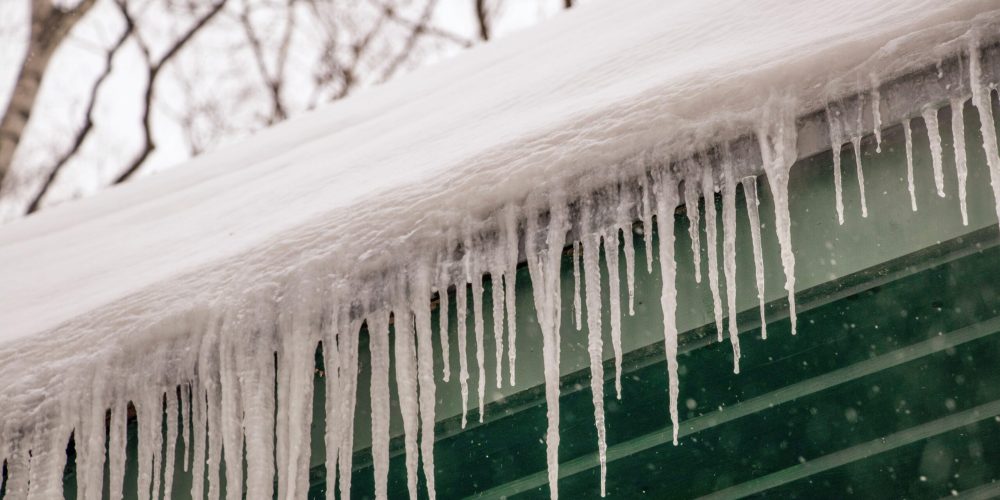
- A thick ridge of ice along the eaves or inside the gutters
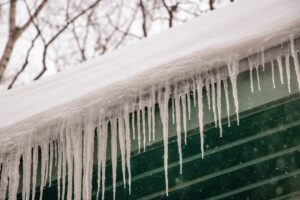
- Large icicles hanging from the gutters or roof edge, especially with water dripping behind them
- Water stains or damp spots on ceilings or upper walls near exterior walls
- Peeling paint or bubbling drywall near the top of exterior walls
- Wet or compressed insulation in the attic, or frost on the underside of the roof deck
- Gutters pulling away from the house under the weight of ice
How Ice Dams Damage Your Roof and Home
Ice dam roof damage isn’t limited to the roof. Water that backs up under the shingles can soak the roof decking, drip into the attic, and run down inside exterior walls. Over time, that can lead to:
- Rotted roof decking and loose or damaged shingles
- Wet insulation that stops working and can grow mold
- Stained ceilings, damaged drywall and peeling paint
- Bent or detached gutters and downspouts
Because the leak often starts out of sight, an ice dam roof leak can go unnoticed until the damage is already done. If you see stains inside after a cold snap, it’s worth having the roof inspected before the next thaw.
How to Remove an Ice Dam Safely
If an ice dam has already formed, the goal is to let water drain off the roof without damaging your shingles or putting yourself at risk.
What you can do safely
- Rake snow off the lower part of the roof from the ground. A long-handled roof rake removes the snow that feeds the ice dam. Clear the first few feet above the eaves, and never stand on a ladder or the roof to do it.
- Use calcium chloride, not rock salt. Filling a nylon stocking with calcium chloride ice melt and laying it across the ice dam can melt a channel for water to drain. Rock salt can damage shingles, gutters and plants below.
- Call a professional for large or stubborn ice dams. Ice dam removal professionals use low-pressure steam to melt the ice without damaging the roof.
What to avoid
- Don’t chip at the ice with a hammer, ice pick or shovel. This almost always damages shingles and gutters, and can create new leaks.
- Don’t climb onto an icy roof. Falls from roofs and ladders are a serious risk in winter.
- Don’t use a pressure washer or open flame. High pressure can strip granules and lift shingles, and heat guns or torches are a fire hazard.
Removing an ice dam deals with this winter’s problem. Preventing the next one means fixing why it formed in the first place.
How to Prevent Ice Dams
The most effective ice dam prevention keeps your roof deck cold and evenly cold, so snow doesn’t melt in one place and refreeze in another.
1. Seal air leaks into the attic
Air sealing is usually the most effective step. Sealing gaps around light fixtures, plumbing and electrical openings, chimneys and attic hatches stops warm, moist air from reaching the roof deck.
2. Add attic insulation
Once air leaks are sealed, adding insulation helps keep heat in your living space and out of the attic. An energy auditor or insulation contractor can tell you whether your attic is under-insulated.
3. Balance your attic ventilation
A properly ventilated attic draws cold air in through soffit vents at the eaves and lets warm air out through ridge or roof vents. Blocked soffit vents, too few exhaust vents, or a mix of incompatible vent types can all trap warm air. We check ventilation on every roof we inspect, because it affects both ice dams and the lifespan of your shingles.
4. Install ice and water shield when you replace your roof
Ice and water shield is a waterproof membrane installed under the shingles along the eaves, valleys and other vulnerable areas. It doesn’t stop ice dams from forming, but it helps keep water from getting into your home if one does. Building codes in cold climates generally require an ice barrier along the eaves, and it’s a standard part of every roof replacement we complete.
5. Keep gutters and downspouts clear
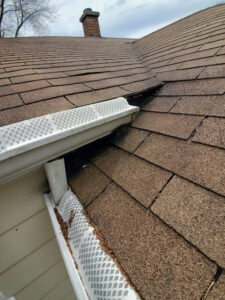
Clean gutters before winter so meltwater has somewhere to go. Downspouts should also be clear and direct water away from your foundation. If your gutters fill with leaves and seeds every fall, gutter guards can help. Our post on why gutter maintenance matters covers more.
6. Use heat cables as a short-term fix
Heat cables installed in a zigzag pattern along the roof edge can keep drainage channels open. They’re useful on problem areas, but they treat the symptom rather than the cause, and they add to your energy bill. If you need them every winter, it’s a sign your attic needs attention.
Does Homeowners Insurance Cover Ice Dam Damage?
It depends on your policy. Many homeowners policies cover sudden water damage inside the home caused by an ice dam, such as damaged ceilings, walls and insulation, but they may not cover removing the ice itself or problems caused by poor maintenance. Check your policy or ask your agent, and document any damage with photos as soon as you find it.
When to Call a Roofer
Call a roofing contractor if you:
- Find water stains or leaks inside after snow or a cold snap
- Get ice dams in the same spots every winter
- See damaged shingles, sagging gutters or soft spots on the roof once the ice melts
- Have an older roof that may not have ice and water shield along the eaves
At Euclid Roofing & Siding, we inspect the whole system: shingles, flashing, decking, attic ventilation and gutters. Then we explain what’s causing the problem and what it will take to fix it. If a roof repair will solve it, we’ll tell you. If your roof is due for replacement, we’ll make sure the new one is built to handle northern Illinois winters. For leaks after winter storms, see our storm damage roof repair services.
Ice Dam FAQs
Are icicles a sign of an ice dam?
Not always, but large icicles along the roof edge often mean snow is melting higher on the roof and refreezing at the eaves, which is how ice dams form. If you see icicles along with a ridge of ice at the edge of the roof, or water stains inside, have the roof checked.
Do gutter guards cause ice dams?
Gutter guards don’t cause ice dams. Ice dams form on the roof itself because of heat loss from the attic. Ice can build up on top of some gutter guards in very cold weather, but keeping gutters free of debris generally helps meltwater drain.
Can ice dams happen on a new roof?
Yes. A new roof doesn’t fix attic heat loss or poor ventilation. That’s why we look at ventilation and the eave protection as part of every roof replacement, not only the shingles.
What is the best way to prevent ice dams?
Sealing air leaks into the attic, adding insulation and balancing attic ventilation are the most effective long-term fixes. Ice and water shield at the eaves adds protection if an ice dam does form.
Get a Free Roof Inspection
Euclid Roofing & Siding is a family-owned roofing company that has served the Chicago area since 1976. We work with homeowners across the north and northwest suburbs, including Palatine, Schaumburg and Arlington Heights.
If you’re dealing with ice dams or a winter leak, call (847) 202-3740 or contact us to book a free roof inspection.