Your roof takes the first hit every time a storm rolls through Chicago, and with hail, high winds, and heavy rain a regular part of the forecast here from spring through fall, a storm damage roof inspection isn’t optional maintenance. It’s protection for the rest of your home. A missed shingle or a hairline crack in flashing can turn into a five-figure repair if it goes unnoticed through even one more storm.
Here’s exactly what to check, and when it’s time to call in a professional.
Do This Right After a Storm
Before you get into the detailed checklist below, here’s your immediate post-storm routine:
- Walk the yard first: Granules in the gutters or yard, shingle pieces on the ground, or dented downspouts are all quick visual cues something happened up top.
- Check ceilings and walls inside: A fresh water stain means water already found a way in. Don’t wait to investigate.
- Photograph everything you can see from the ground: This helps with insurance later, even before a professional inspection.
- Call for an inspection within a few days, even if nothing looks obviously wrong. Some storm damage isn’t visible until it’s already caused a leak.
Your Storm Damage Roof Inspection Checklist
1. Missing or Damaged Shingles
2. Interior Water Stains or Leaks
Water stains on ceilings or walls are one of the clearest signs a storm has already compromised your roof. Leaks can travel before they show up, so a stain isn’t always directly under the entry point. That’s exactly why a full roof inspection matters, not just a glance at the obvious spot.
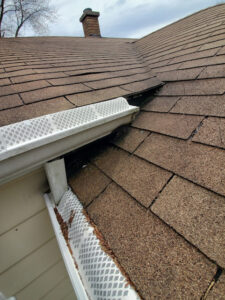
3. Clogged or Damaged Gutters
Gutters move water away from your roof and foundation. If they’re clogged with debris or storm-damaged, water pools instead of draining, which damages both the gutters and the roof edge over time. Confirm they’re clear and still securely attached after any major storm.
4. Damaged Flashing
Flashing around chimneys, vents, and skylights is one of the most common places for leaks to start, and one of the hardest for homeowners to inspect safely from the ground. Corroded, cracked, or missing flashing should be checked by a professional after any significant wind or hail event.
5. Hail Bruising and Granule Loss
Hail doesn’t always leave a visible hole. Often it just bruises the shingle mat or knocks granules loose. Dark spotting on shingles or a sudden increase in granules in your gutters are both signs worth a closer look, even if the roof looks fine from the street.
6. Roof Age
If your roof is 20+ years old, it’s more vulnerable to storm damage even without visible wear, since aging shingles lose flexibility and wind resistance over time. An older roof is worth a professional storm damage inspection even after a moderate storm, not just a severe one.
Chicago’s Storm Season: What to Watch For
North Suburbs and Chicagoland homeowners deal with a few storm patterns worth knowing:
- Spring and summer hail season brings the highest risk of the granule loss and bruising described above.
- High-wind derecho-style storms can cause the kind of shingle lift and tear damage that’s often mistaken for normal wear.
- Winter ice dams form when melting snow refreezes at the roof’s edge, forcing water back up under shingles. It’s a different mechanism than storm wind or hail damage, but just as damaging if ignored.
When to Call a Roofing Professional vs. Wait
If you have an active leak, exposed roof deck, or visible hole from debris, that’s an emergency. Call immediately. If the damage is cosmetic, or you’re unsure whether there’s damage at all, it’s still worth a prompt inspection within a few days. Hail bruising and granule loss don’t always leak right away, but documenting them promptly matters if you need to file an insurance claim later.
Free Storm Damage Roof Inspections in Chicago
If you’ve spotted any of the signs above, don’t wait for a small issue to become a bigger one. Euclid Roofing & Siding offers free storm damage roof inspections across the North Suburbs. We’ll document what we find, walk you through what (if anything) needs attention, and help with the insurance process if you need to file a claim.