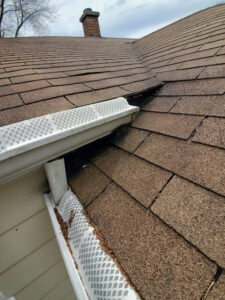
Gutters are easy to forget about until something goes wrong. Then it’s water spilling over the edge in a storm, a damp basement, peeling paint on the fascia, or a row of icicles hanging off the roof in January. Most of those problems come back to the same cause: gutters that weren’t cleaned or maintained.
The good news is that gutter maintenance doesn’t take much. This guide covers how often you should clean your gutters, the best times of year to do it in the Chicago area, the signs your gutters need attention, and when it’s time to repair or replace them.
Why Gutter Maintenance Matters
Your gutters have one job: collect rain and snowmelt from the roof and carry it away from your home. When they’re clogged, damaged or loose, that water goes where it shouldn’t. Regular gutter maintenance helps prevent:
- Foundation and basement water problems. Overflowing gutters dump water right next to your foundation, where it can seep into basements and crawl spaces.
- Roof and fascia damage. Water that backs up in a clogged gutter can rot the fascia boards behind it and work its way under the edge of the roof.
- Siding and paint damage. Overflow runs down exterior walls, staining siding and causing paint to peel.
- Mold and moisture. Standing water and damp walls create the conditions for mold inside and outside your home.
- Ice dams in winter. Gutters packed with wet leaves freeze solid and can contribute to ice dams on your roof, which force meltwater back under the shingles.
- Landscaping erosion and pests. Overflow washes out garden beds, and standing water in gutters attracts mosquitoes and other pests.
How Often Should You Clean Your Gutters?
For most homes, clean your gutters at least twice a year: once in late spring and once in late fall. That’s enough to clear out the heaviest debris before it causes problems.
You’ll need to clean them more often if:
- You have trees overhanging the roof. Homes with mature trees nearby may need cleaning three or four times a year.
- You have pine trees nearby. Pine needles fall year-round and pack tightly into gutters, so check them more often.
- Your gutters overflowed in the last storm. That’s a sign of a clog, no matter when you last cleaned them.
- Your roof is older. Aging asphalt shingles shed granules that settle in gutters and add to buildup.
Homes with few trees nearby may only need a once-a-year cleaning, but it’s still worth checking them in spring and fall.
The Best Times to Clean Gutters in the Chicago Area
Timing matters as much as frequency. In the Chicago suburbs, these are the times that make the biggest difference:
Late spring
Wait until after maple trees drop their seeds, the “helicopters” or “whirlybirds” that pile into gutters by the thousands. Clearing gutters after that, and before summer thunderstorms, keeps them ready for heavy rain.
Late fall
Clean gutters after most leaves have fallen but before the first hard freeze. Leaves left in gutters over winter freeze into a solid mass that blocks meltwater and adds weight that can pull gutters away from the house.
After major storms
High winds can dump branches, leaves and roof debris into gutters at any time of year. After a big storm, check that your gutters and downspouts are clear and still securely attached.
Signs Your Gutters Need Cleaning or Repair
Don’t wait for your next scheduled cleaning if you notice:
- Water spilling over the sides of the gutters during rain
- Plants, moss or seedlings growing in the gutters
- Gutters sagging or pulling away from the fascia
- Little or no water coming out of the downspouts during rain
- Water stains or peeling paint on siding or fascia below the gutters
- Pooling water or erosion along your foundation
- Birds or pests nesting in the gutters
- Large icicles or ice buildup along the gutters in winter
Your Gutter Maintenance Checklist
Every time you clean or check your gutters, work through these steps:
- Remove debris. Scoop out leaves, seeds and sludge, starting near the downspouts.
- Flush the gutters. Run water through each section with a garden hose to wash out remaining grit and confirm water flows toward the downspouts.
- Clear the downspouts. If water backs up, flush the downspout from the top or use a plumber’s snake to remove the clog.
- Check the slope. Standing water after flushing means a section isn’t pitched properly toward the downspout.
- Inspect seams and joints. Look for leaks, gaps and rust spots, especially at corners and end caps.
- Check the hangers. Make sure gutters are firmly attached and not pulling away from the fascia.
- Check the downspout outlets. Water should discharge several feet from your foundation. Add extensions or splash blocks if it doesn’t.
A note on safety: Gutter cleaning means ladder work, and falls are a real risk, especially on two-story homes. Use a sturdy ladder on level ground, have someone hold it, and never lean out past the rails. If you’re not comfortable on a ladder, hire a professional.
How Gutter Guards Reduce Maintenance
If you’re cleaning gutters several times a year, gutter guards can cut that down considerably. They cover the gutters to keep leaves, seeds and other debris out while letting water flow through. We recommend Valor Gutter Guards, which keep debris out and maintain steady water flow, even in heavy rain.
Gutter guards don’t make gutters completely maintenance-free, and they aren’t the right fit for every home. Our post Are Gutter Guards Worth It? An Honest Breakdown covers the pros, cons and types of guards to help you decide.
When to Repair or Replace Your Gutters
Cleaning won’t fix gutters that are damaged or failing. Consider repairs if you have a few leaking seams, a loose section or a bent downspout. Consider replacing your gutters if:
- They’re sagging or pulling away in several places
- There are cracks, holes or rust along multiple sections
- Water keeps pooling because the slope can’t be corrected
- The fascia boards behind them are rotting
- They overflow in heavy rain even when clean, which can mean they’re undersized for your roof
If you’re replacing your gutters, it’s the ideal time to add gutter guards, since both can be installed together.
Gutter Maintenance FAQs
How often should you clean your gutters?
At least twice a year, in late spring and late fall. Homes with overhanging trees or pine trees nearby may need cleaning three or four times a year.
What is the best month to clean gutters?
In the Chicago area, late May or June works well in spring, after maple seeds have dropped. In fall, aim for November, after most leaves have fallen and before the first hard freeze.
What happens if you never clean your gutters?
Clogged gutters overflow, which can damage your foundation, basement, fascia, siding and landscaping. In winter, they can freeze and contribute to ice dams that cause leaks inside your home.
Do gutter guards mean I never have to clean my gutters?
No, but they greatly reduce how often you need to. Most gutter guards need an occasional check and rinse to keep working well.
Let Us Take Care of Your Gutters
Euclid Roofing & Siding inspects, repairs and replaces gutters for homeowners across Chicago’s north and northwest suburbs, including Palatine, Schaumburg and Arlington Heights. Our team will check your gutters for damage, clogs and weak points, and fix problems before they turn into costly repairs.
Learn more about our gutter services, or call (847) 202-3740 to schedule an inspection.